Resilient Cladding & Roofing
Police Station Mimics Coastal Landscape in Lincoln City, Oregon
by Marcus Dodson, Editor
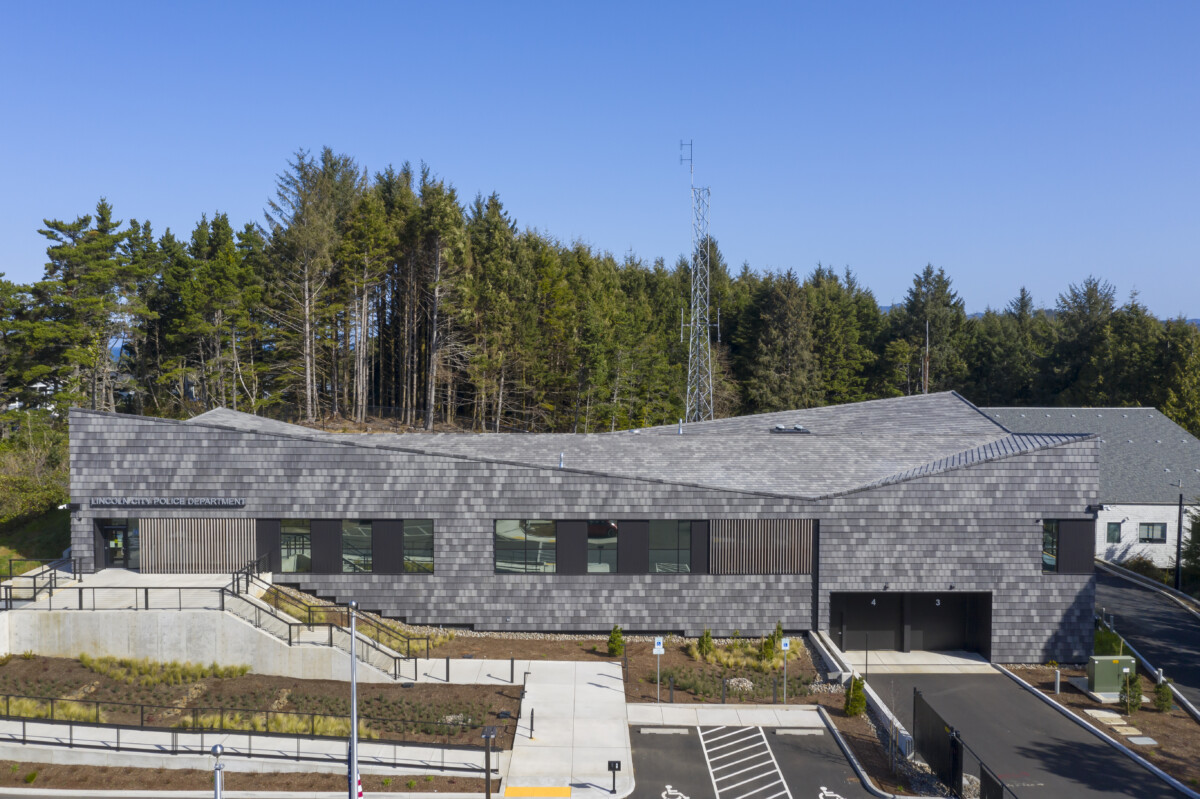
Nestled in the heart of Lincoln City, Oregon, a newly constructed police station stands as a testament to both innovation and resilience. Outgrowing its old facility, the city’s Police Department engaged FFA Architecture and Interiors of Portland, Oregon, to design a headquarters inspired by the rugged coastal landscape and the unwavering dedication of law enforcement. Drawing on the enduring strength of rocks buffeted by wind and waves, the project seamlessly blends form and function, setting a new standard for durable public safety architecture while honoring the unique landscape that surrounds it.
“On the Oregon coast there is a lot of concern about earthquakes, and rain and wind are constant,” said Ian Gelbrich, AIA, Partner, FFA. “So, in addition to considering the police profession, we looked to nature for examples of what portrays resiliency, honing in on the rocks in the surf that get pounded day in and day out. The station’s design structurally and visually mimics those solid rocks.”
Half a mile inland from the sea, the station’s site was handpicked for sitting outside of tsunami inundation zones. The roughly 18,000-sq.ft. facility, constructed by Emerick Construction Co. of Tualatin, Oregon, is far from ordinary. The station’s roofing and cladding are one and the same with Westlake Royal Roofing Solutions™ Newpoint™ Concrete Roof Tile. “We were looking for a cementitious material that could be used for the full exterior,” added Gelbrith. “We needed something durable to withstand the coast’s relentless weather and decided on Newpoint’s concrete roofing.”
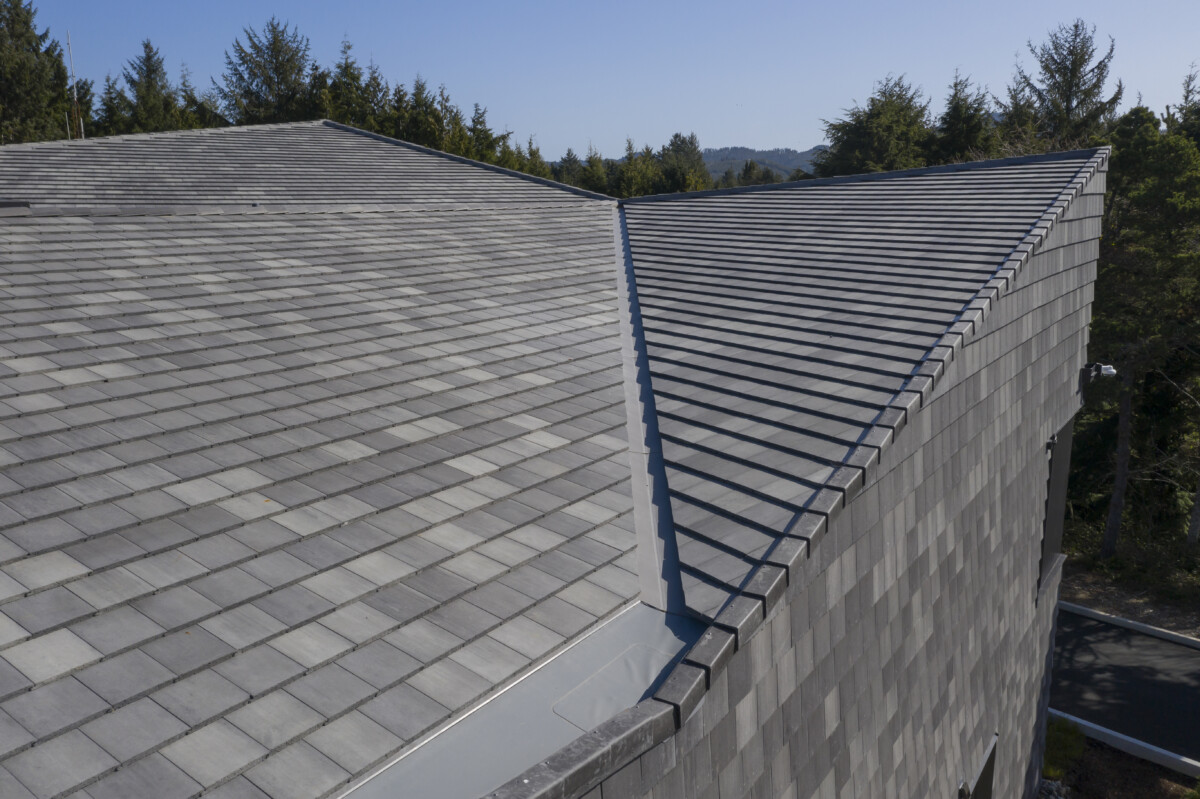
The designers specified Westlake’s concrete tile in the Stone Mountain Blend, matching the coastal rocks. Offering superior strength and longevity, the sustainable tile is manufactured using naturally occurring geologic material and is Class A Fire rated. Concrete tile gains strength over time and lasts 3.75 times longer than asphalt shingles.
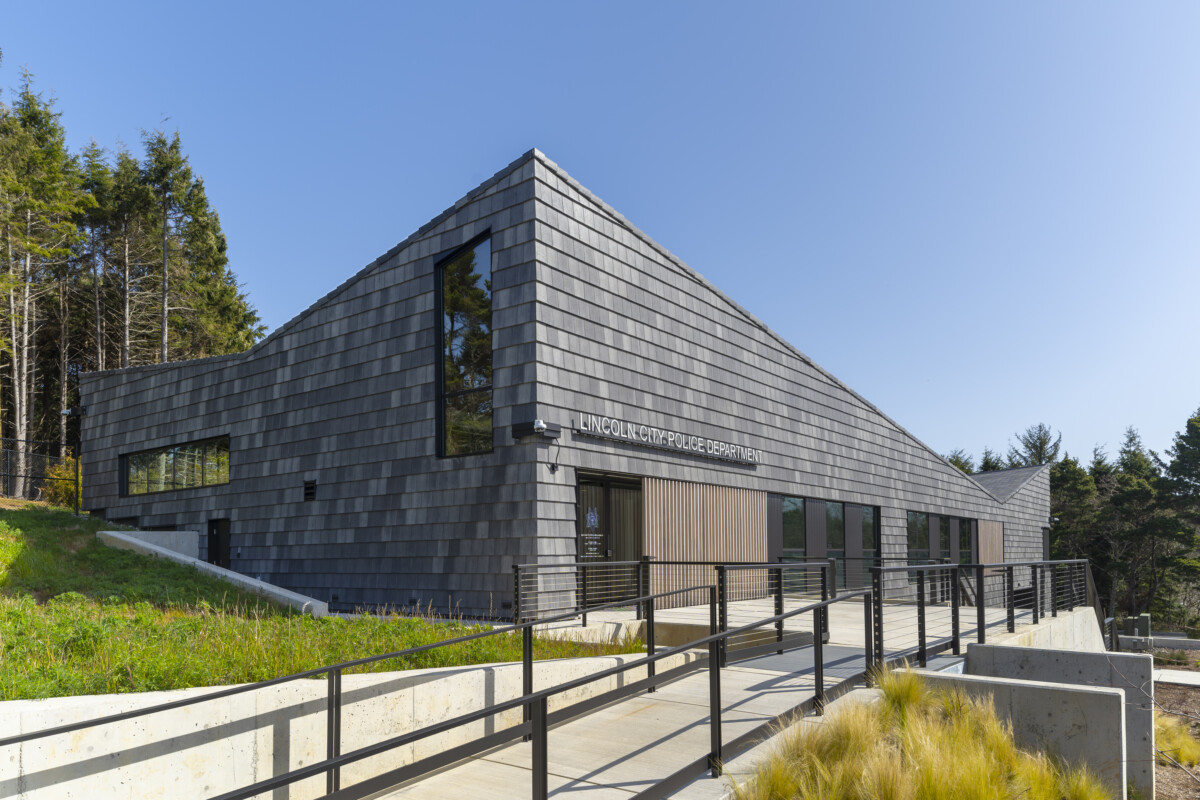
“When designing the roof, we took the typical gable form and selected two points on each façade where we wanted water to flow down into the gutter system and express off the façade,” added Gelbrith. “We then lifted up each corner from that point, which added complexity but makes the roof unique.”
CC&L Roofing Co. of Portland completed the roof installation. “Lincoln City is prone to high winds and, with our experience working in this climate, we knew the right way to install the tile so it would be able to survive the coast,” said Dan Cornwell, President and Owner of CC&L Roofing Co., and Western States Roofing Contractors Association past-president. Notably, concrete tile can withstand high-force winds when properly installed in accordance with the Tile Roofing Institute’s Installation Manual for Moderate Climate Regions.
Installers applied two layers of underlayment, with the material half lapped and weaved at the valleys over plywood sheathing. Next, CC&L covered the underlayment with a single layer of Westlake Royal TileSeal™ HT, a premium self-adhered high temp underlayment with a modified asphalt core. “We know this is a different approach but if there is any issue in the future it can be repaired without removing sheathing,” said Cornwell.
CC&L then installed Westlake Royal Roofing Components™ 1×3 Elevated Battens over the self-adhered membrane on the roof as well as over the structure’s weather resistive wall system before finally adorning it with the tile. “We had never installed concrete tiles as wall cladding, especially on a three-story structure,” added Cornwell. “But what resulted is truly a standout facility.”